Die Rosen am Campus der ABK blühen jeden Sommer und schaffen einen atmosphärischen Raum,
der Sinne und Sinnlichkeit anspricht. Ein Umfeld, das besonders an einer Kunstakademie wichtig
ist. Als ich erfuhr, dass die Rosen seit 2013 von Enno Lehmann gepflanzt und gepflegt werden und er
diese Arbeit als „Blütezeit’“ betitelte, wollte ich mich daran beteiligen. Dabei geht es mir
um das Konservieren und Weitertragen von „Blütezeit’“.
Doch wie kann ich etwas bewahren, das dafür bestimmt ist,
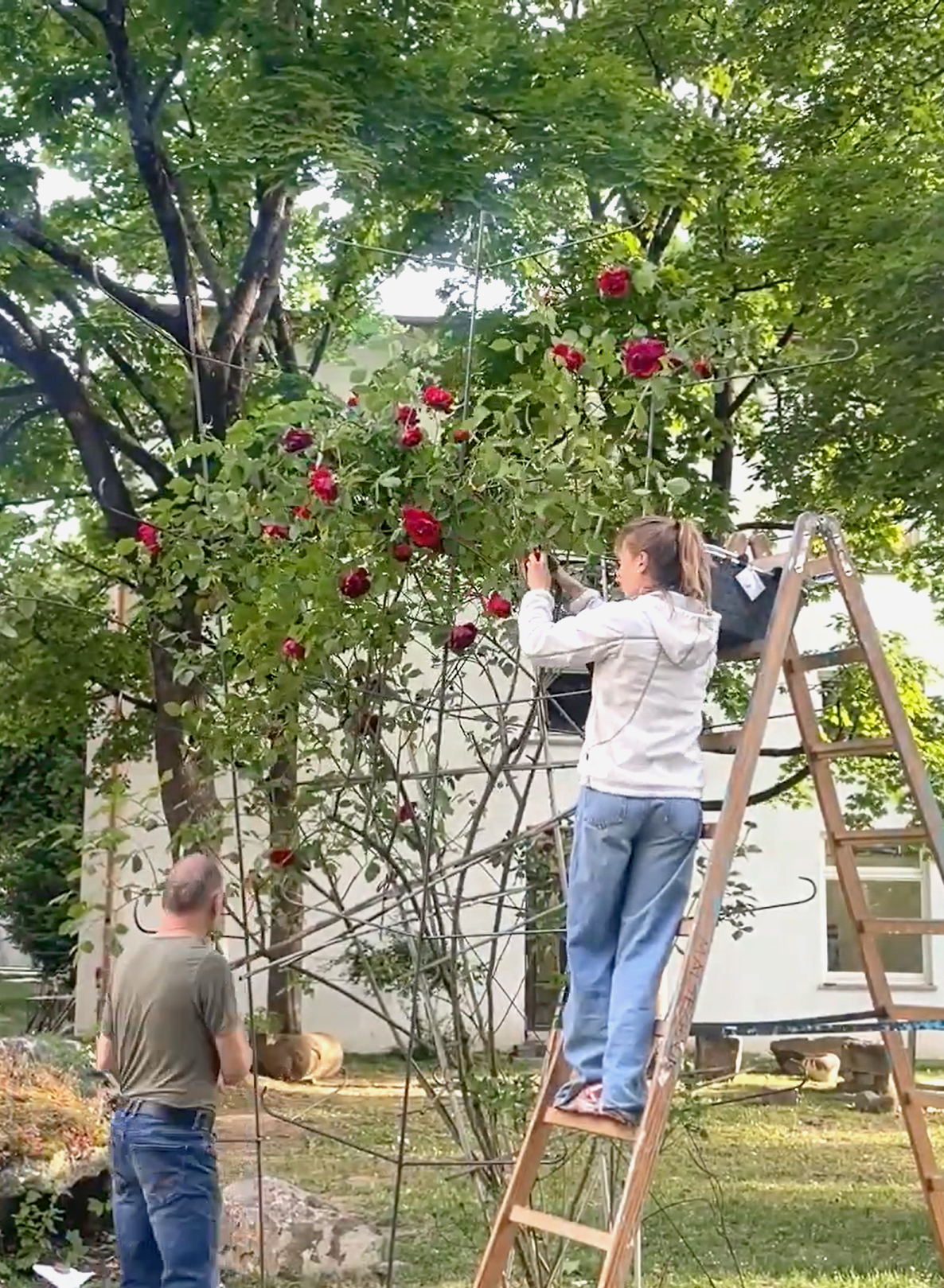
zu vergehen? Kurz vor dem Verblühen habe ich die Blütenblätter von den Rosenbüschen am Campus
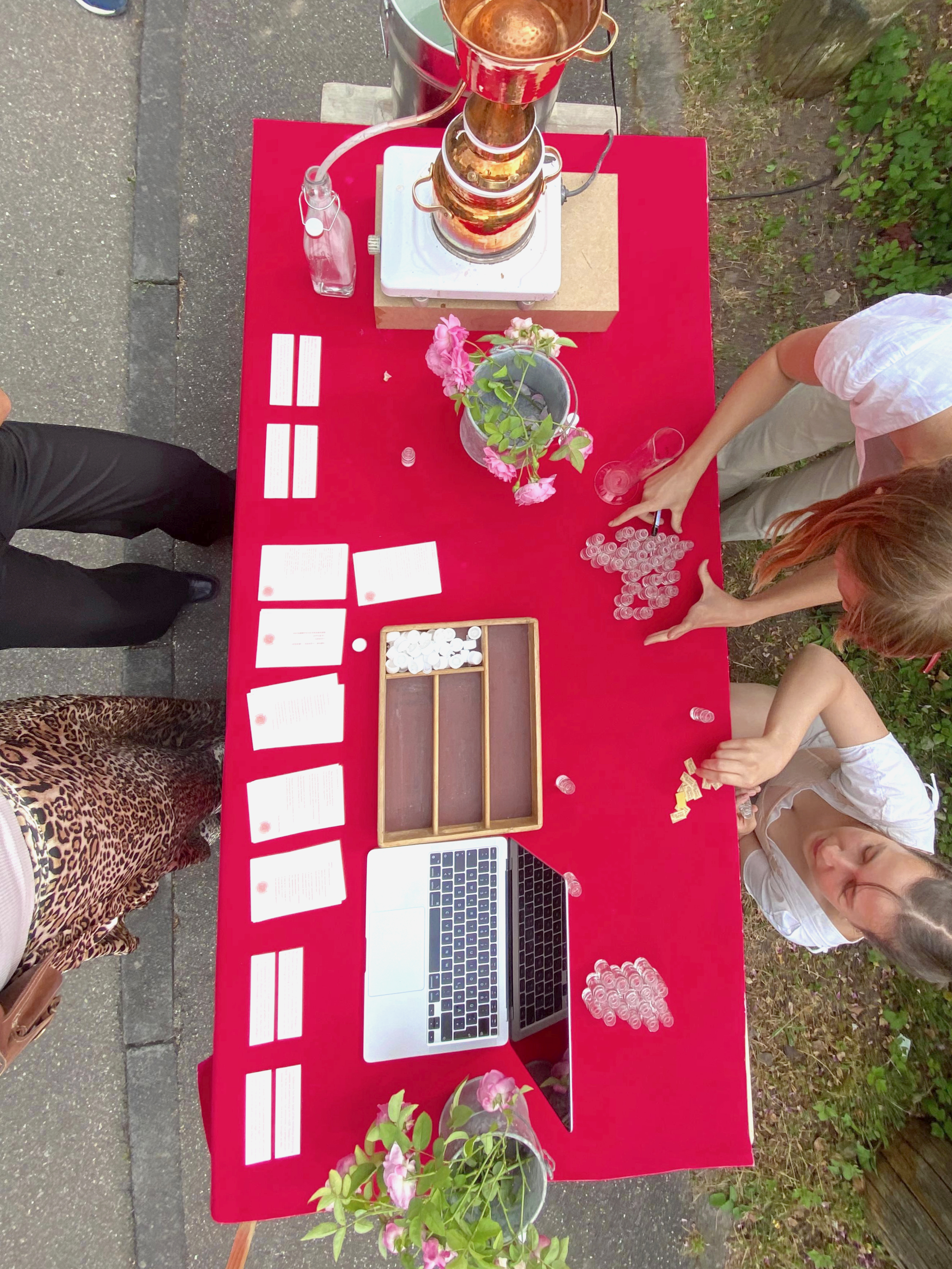
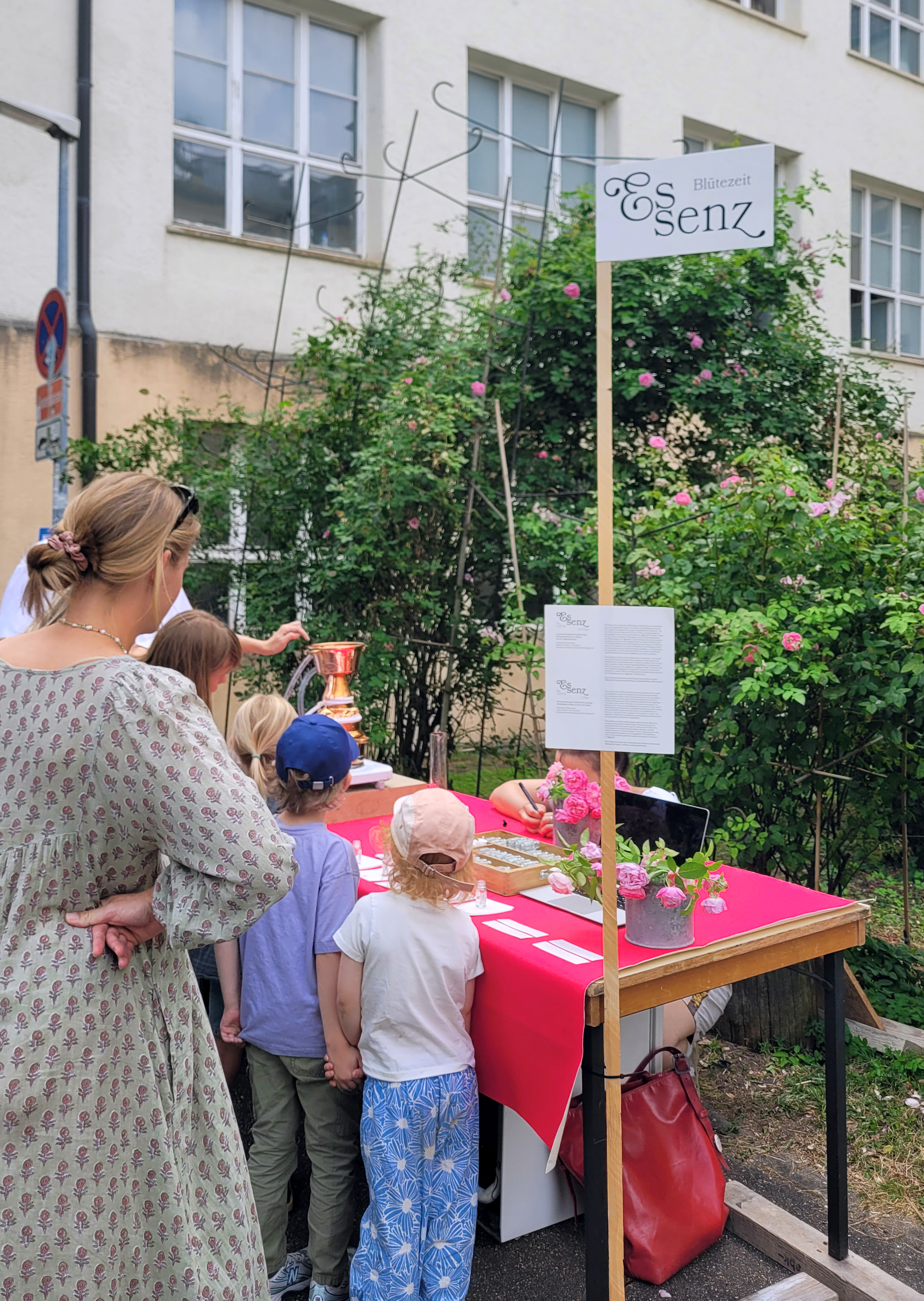
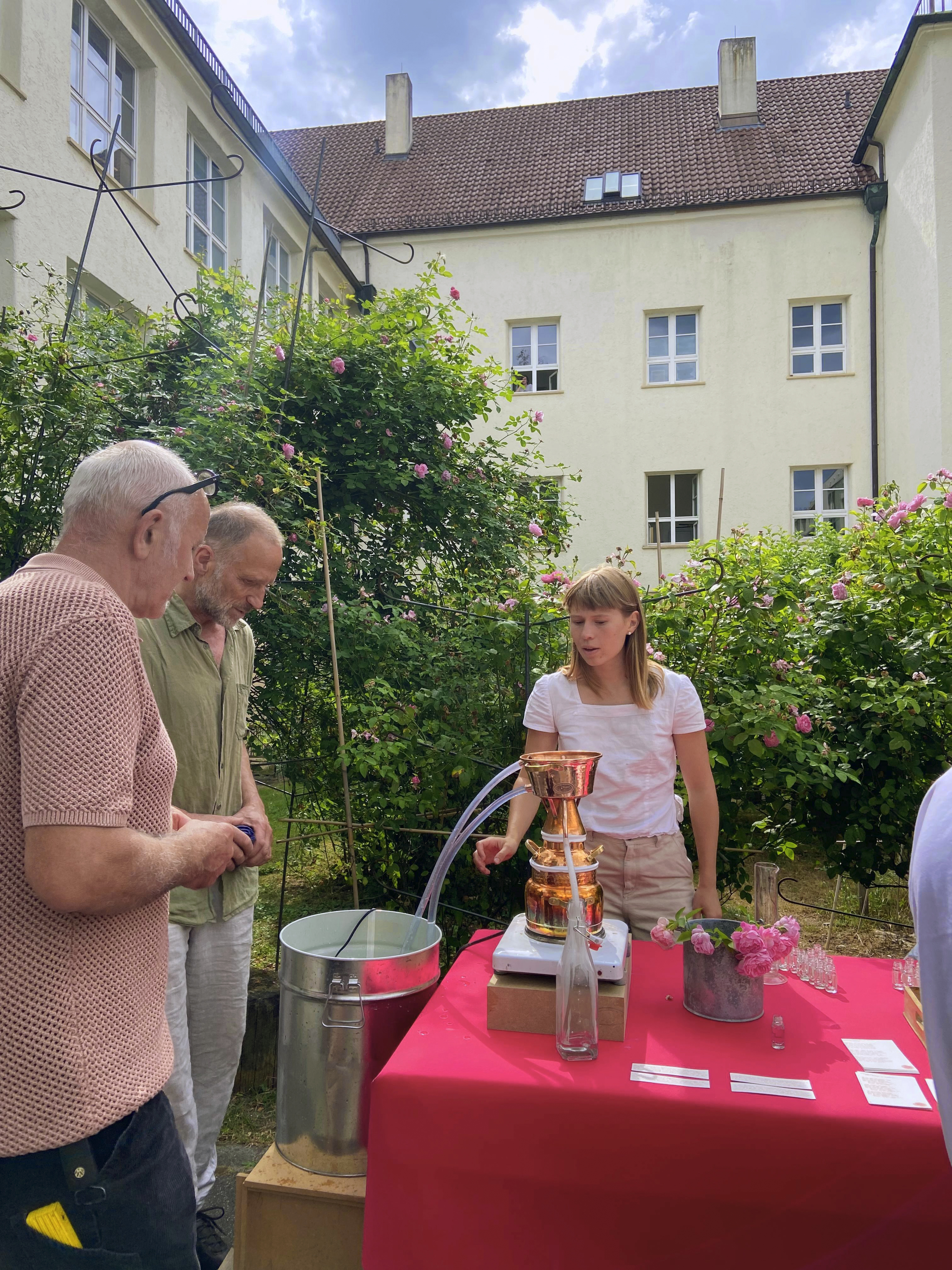
der ABK geerntet und eingefroren. In meiner Performance am Rundgang werde ich diese gemeinsam
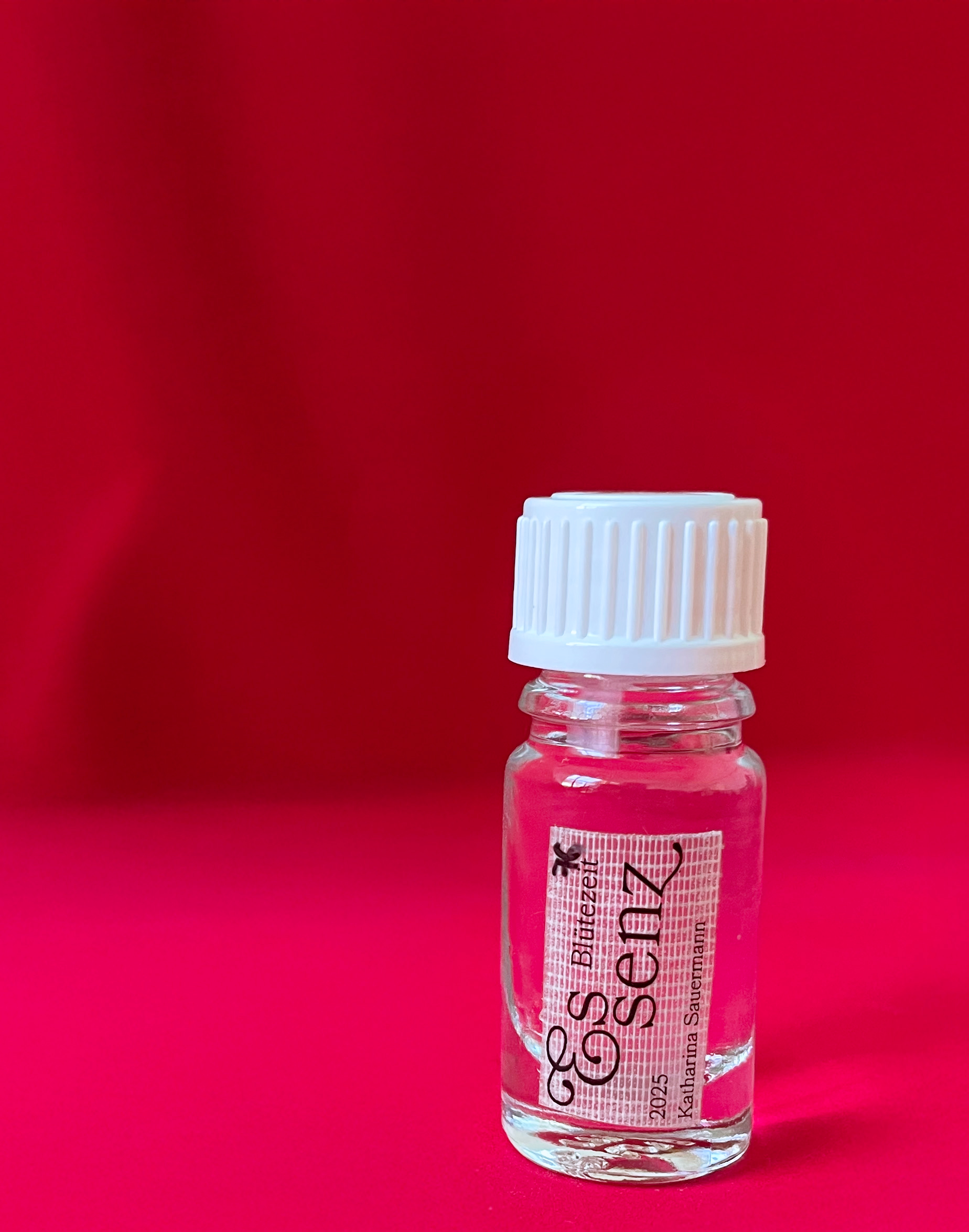
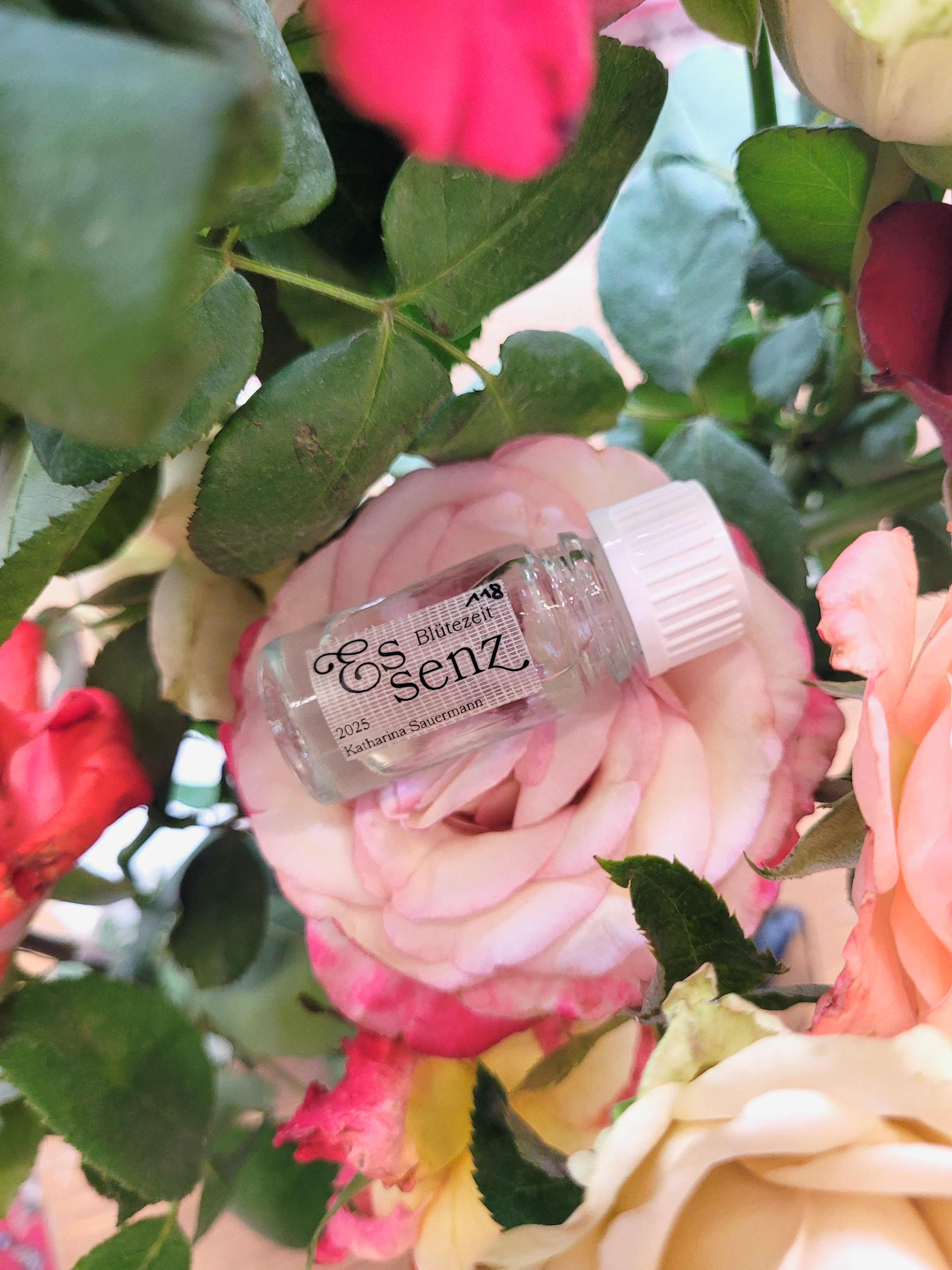
mit Besucher*innen destillieren, um Rosen hydrolat herzustellen. Das Rosenhydrolat fülle ich in kleine
Glasflaschen und die Besucher*innen sind eingeladen, sich eine zu nehmen.
Die Flaschen werden weder verkauft noch verschenkt –
sie werden nach dem Prinzip Geben für Geben angeboten. Dabei können die Besucher*innen selbst bestimmen, was
sie in welcher Form an wen geben möchten. Dieser Impuls fürgesellschaftliche Interaktion lädt dazu ein,
aktiv an einem Aspekt der „sozialen Plastik“ zu formen und durch eigenes Engagement, Freiräume für das gute Gemeinsame entstehen zu lassen. Mit der Verteilung
des Rosenhydrolats weitet sich der Wirkungsraum von „Blütezeit’“ physisch aus.
Aber viel mehr wird dadurch die Essenz dieser Arbeit verteilt:
Geben, für ein gutes, gemeinsames, gesellschaftliches Miteinander.